
Blog
One thing that helps me manage my anxiety
I’ve been experiencing an uneasy feeling in my body.
Recently, I was anxious about a new step I was taking in my business.
Quite anxious.

As I was exploring my anxiety, I noticed that I also had the thought: Because I’m anxious, something *must* be wrong.
My clients know that one of my favorite things is identifying thought errors — subtle errors in reasoning in the brain. And it became clear to me: “Because I’m anxious, something must be wrong” was a thought error.
My brain had simply made a mistake. It wasn't true that because I was anxious, something had to be wrong.
Actually, I could be anxious, but nothing could be wrong.
Which was exactly true in this particular moment: nothing was wrong at all. Rather, my anxiety was actually simply telling me that I was at my developmental edge — doing something new, and, yes, a bit risky.
I played with a new thought, instead: I can be anxious, and nothing can be wrong.
…
Here’s some advice that might help reduce your anxiety:
Have you ever heard the advice, in the self-development world, to just re-interpret anxiety as “excitement”? You aren’t anxious, you’re just buzzing with excitement!
I have often felt annoyed with this advice. No, I would think to myself, I’m actually anxious.
But this new thought actually did feel believable:
I can be anxious, and nothing can be wrong, I told myself.
I can be anxious, and it just means that I’m at my developmental edge.
So, I have been reminding myself a lot lately: I can be anxious, and nothing can be wrong. I’m just at my developmental edge.
And then taking a big breath, continuing to feel anxious, and moving forward.
…
As always, I’m rooting for you in the week ahead. You’ve got this.
Katie
p.s. Most of us have thought errors so subtle, and so personalized, that it can be hard (or impossible) to spot them on our own. That’s where working with a coach can be life-changing: just shifting a few key thoughts can completely change your experience of your own life. If you’d like to work with me, learn more here.
If this essay resonated with you, you'll love my newsletter. Sign up for free + get new ideas every Sunday!
That time I was convinced I was a bad mom
One of my sons has some health issues, and recently, I was telling my coach about all the things I could (and maybe should?) be doing to make sure he gets the best possible care.
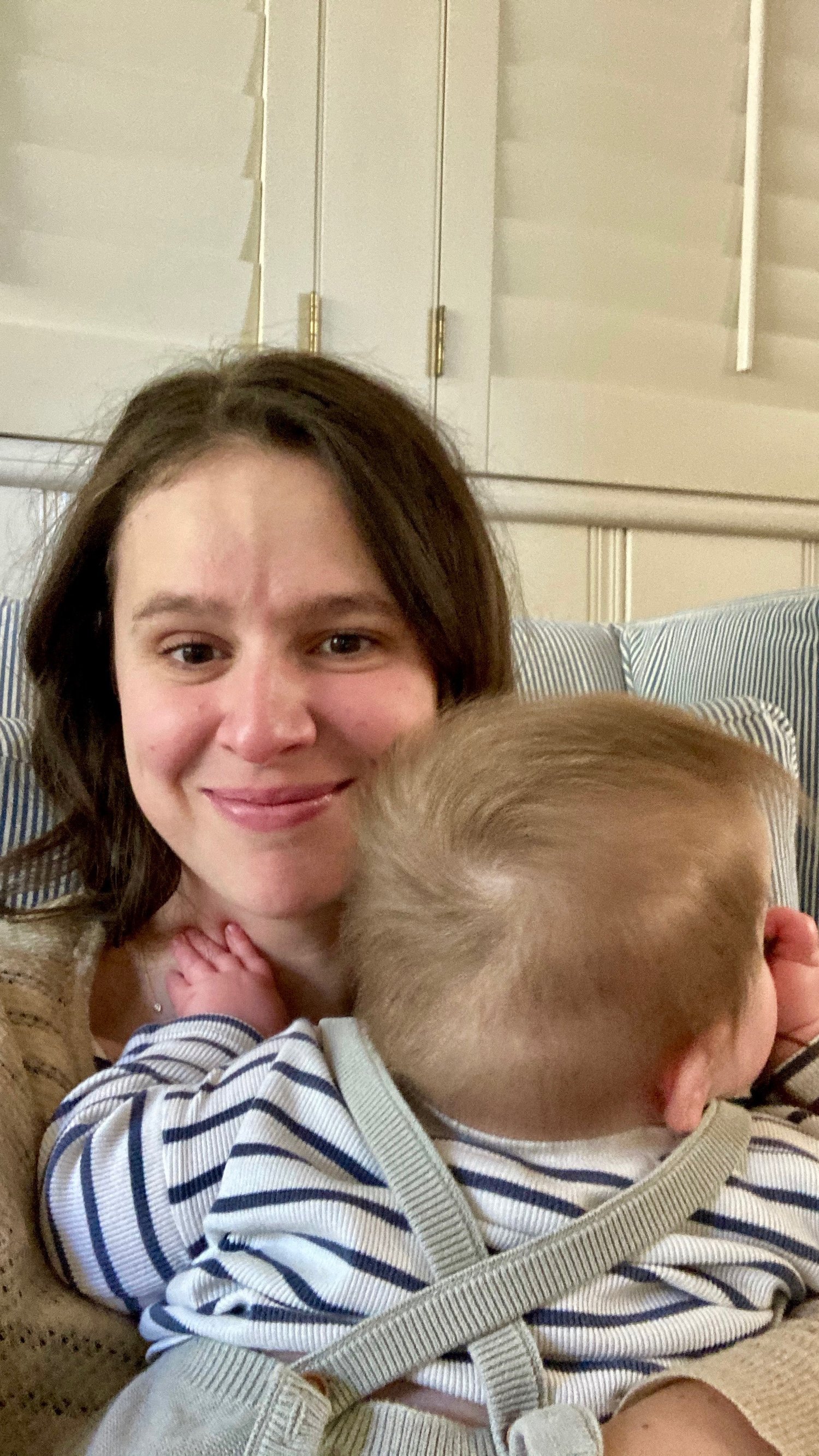
She listened carefully, and then she said to me:
Katie, I hear you that there are more things you could be doing for your son.
What percent of the time are you thinking about those things? Versus what percent of the time are you thinking about all the things you are *already* doing for him and his health?
And that’s when the pin could drop.
“Uh, it’s basically 98% on things I’m not doing,” I told her.
When we hung up the call, I promptly made a list of all of the things I’ve done to support him and his health.
You know what? There were a lot of things on that list.
You know what else? After I made that list, I felt a lot less anxious.
I even thought: Hey, I’m a pretty solid mom over here.
And: Hey, maybe my son *is* getting great care.
So here’s your invitation:
Worried that you’re not good at your job? Make a list of all of the ways in which you are incredible at your job.
Worried that you’re a “bad person”? Make a list of all of the ways in which you’re actually a good person.
Worried that you’re a bad mom? Make a list of all of the ways in which you’re an awesome mom.
The point here isn’t to tell a false narrative or to excuse inexcusable behavior. It’s simply that our brains tend to tell narratives that are heavily — and falsely — weighted towards the bad things.
It’s simply to say: a more balanced narrative would be 50-50, positive and negative.
And if it’s a particularly thorny issue for you, I dare you to make a list each day for a week or two. Giving your brain evidence of an idea that it finds hard to believe — over and over and over — does actually change how you think.
In other words: doing it every day feels cheesy…but it freaking works.
…
And a final, kinda-wild observation:
When I feel like I’m actually a pretty decent worker/friend/mom, I find I have even more energy to devote to that area of my life.
Somehow feeling better about myself is also better for other people, too.
I’m here for you. You’ve got this.
Katie
Sign up for my newsletter to get helpful + encouraging essays like this every Sunday morning. It’s free!
What to do instead of (only) worrying
I have a brain that tends to think about what can go wrong. Maybe you do, too.
Today, I wanted to share a strategy (which I first learned about here) that has made a huge difference for me.
Here it is:
When you notice yourself focused on what could go wrong, practice giving equal brain space to what could go right.

Here are some examples from my own life:
When I think: What if my mom dies soon and I miss her so much and can’t call her and chat about the most banal things and also important things?
I try to also think: Or, what if she lives for many years and we have so many lovely moments of connection together — and even after she’s gone, I have so many wonderful memories of her.
…
When I think: What if my husband dies and I am so lonely without him?
I try to also think: Or, what if he lives as long as I do, and we have such a meaningful, satisfying relationship. We cuddle lots, we talk about deep things, and I get to watch him grow and he watches me be the person I yearn to be.
…
Or, here’s another one for me, lately — we’re just about to do some renovations on our home.
When I think: What if our renovation goes terribly? It’s way more expensive than it seems, and it’s totally not worth it, and I just wasted all of this money, and I’ll really miss that money when it’s gone.
I try to also think: What if it’s one of the best things I’ve ever spent money on? What if it lets us enjoy our beautiful lives, the amazing California weather, and our experience as a family in our home, so much more deeply? What if I absolutely *love* it?
…
What I love about this strategy is that it doesn’t require us to only focus on the positive, or pretend that the world is only rainbows-and-rainbow-unicorns.
It simply says: the narrative you’re telling is overly — even unrealistically — negative. The negative thing isn’t the only thing that could happen; it’s just one, negative point on a whole spectrum of possibilities.
For me, training my brain to remember that things could also go right — truly, training my brain to tell a balanced narrative — has made an enormous difference.
As always, I’m rooting for you. You’ve got this.
Katie
Sign up for my newsletter to get helpful + encouraging essays like this every Sunday morning. It’s free!
What to do when you’re not as happy as you “should” be
“I should be okay” — or some variation thereof — is something that I hear a lot.
I had time to relax all afternoon. I should be rested!
My partner is kind and a good person. I should be happy!
I make a decent living and don’t have to work too many hours. I should be grateful!
If we dig down deeply enough, though, the subtext of “I should be okay” is usually: I’m actually not okay.

But being “not okay” confuses us. I mean, my career/relationship/health is good. I should be fine, right?
Maybe it is true that your relationship or your career or how you spend your weekends is mostly fine. That’s great! But it’s also important to notice if, despite your life being good in many ways, there are some subtle things that still feel off.
It’s okay to be “not okay.” It doesn’t mean you’re selfish or ungrateful or that you’ll never be satisfied.
In fact, I think that the feeling of I’m not okay is actually an important part of our continued growth as adults. That feeling tells us there’s something that needs more attention or action. If we’re paying attention, we will have that I’m not okay feeling frequently — in tiny ways and huge ways — throughout our lives.
Being able to hear the subtle nudges of I’m not okay is what will help us make sure that we’re on the life path that is best for us. It’s a life-affirming feeling, even though it can also be uncomfortable.
…
Today, instead of focusing on all the ways that you should be okay, could you gently ask yourself, “In what ways am I not okay?” And listen for the subtle, whisper-like answers?
I’ll be doing it, too.
As always, I’m rooting for you. You’ve got this.
Katie
If this essay resonated with you, you'll love my newsletter. Sign up for free + get new ideas every Sunday!